


How Healing After Facial Plastic Surgery Can Make You Feel & What Helps
I experienced a gentle emotional rollercoaster after rhinoplasty surgery, more like The Barnstormer at Disney World than the TRON Lightcycle/run. I was seventeen and, as most teenagers are, filled with emotion. Every event, however insignificant, seemed like it was the most important thing that could ever happen to me. Would I earn a spot on the top boat in crew? Would the girl I had a crush on say “yes” if I ask her out on a date? Little did I know how life changes with truly important, life-changing events such as becoming a father.
I can no longer empathize with the person I was at that time. I do, however, remember the embarrassing trauma – emotional and physical – of running into a glass door at a friend’s house and fracturing my nose. I remember constantly mouth-breathing at crew practice. Rowing was by far the most important thing in my life at the time. As a result, it makes sense why I would choose to undergo facial plastic surgery.
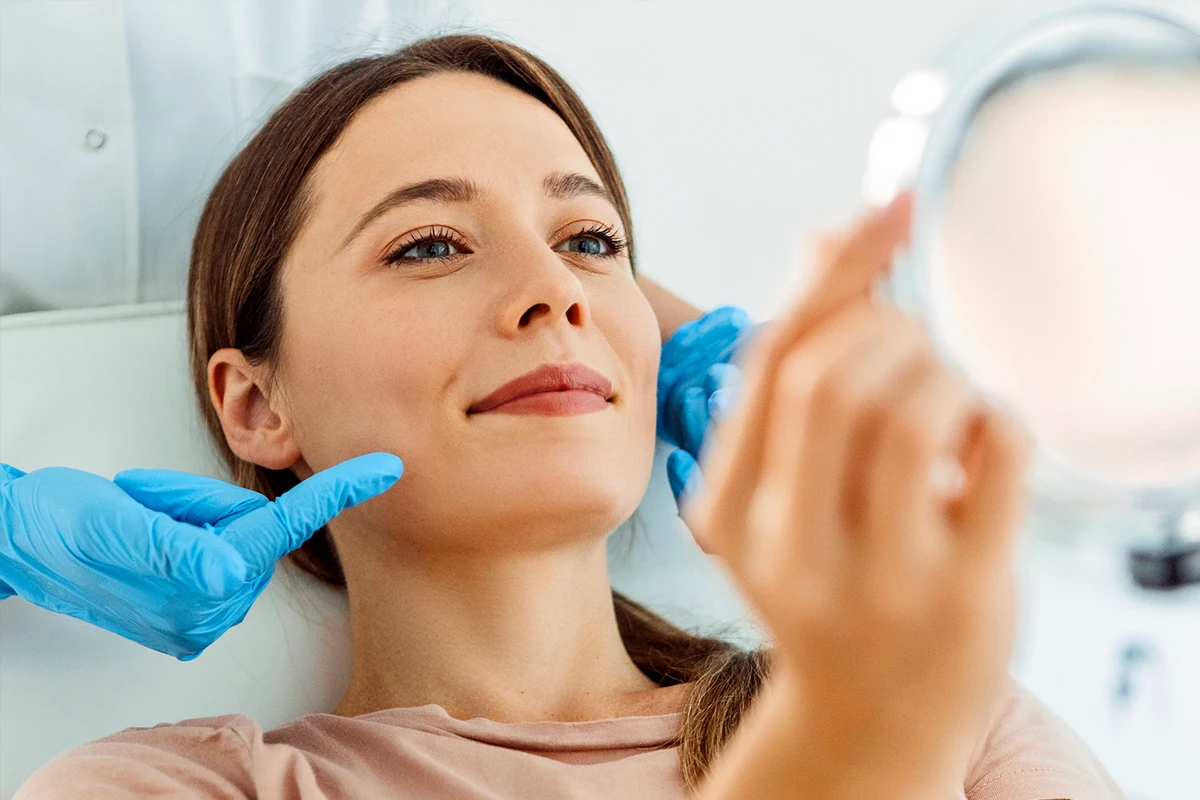
The procedure and recovery were uneventful. However, within a few weeks of surgery I felt conflicted about my choice. I remember looking in the mirror and thinking that I like my nose, that it is straighter, and that I could breathe comfortably. But I could tell it was different. How easily would people notice I had surgery? Do I want them to notice I had surgery? Does it look too perfect? If it looks “too perfect,” does it look unnatural? My teenage angst, no different than anyone else’s and not related to any mental health concerns, was temporarily exacerbated.
Importantly, these feelings subsided completely. I recovered rather quickly. I could breathe well through my nose. Rowing practice became easier. My nose looked incredible and harmonized with my face. Now I am a facial plastic surgeon telling people about my own experience with facial plastic surgery more than twenty years ago.
I often explain to patients that the anticipated trajectory of healing after rhinoplasty and other facial plastic surgery procedures is almost sinusoidal in many cases, with the overall trajectory towards being healed, but with some days that make you feel like you never had surgery – in a good way – and others that remind you that you recently underwent surgery. For example, the nose, eyelids, and/or neck can feel more swollen or less swollen from one day to the next after surgery, with a gradual overall improvement in swelling over weeks and months.
Feelings about these experiences can be amplified as the time between follow-up visits increases and in the rare instances of setbacks that are possible during the healing process. I have found these feelings to be most noticeable between approximately one (1) and three (3) months after surgery. It is during this time that patients have just finished frequent follow up with me for, for example, suture removal. It is during this time that they are noticing the changes associated with healing, from swelling to remodeling of the incisions. They may also be reminded of their surgery as the decreased sensation that can be associated with any surgical procedure improves.
It is immensely gratifying to care for patients as they heal. I typically see a gradual but significant improvement in their beliefs, attitudes, and behaviors related to the specific area(s) treated as they heal. Many begin carrying themselves with more self-confidence as their perception about the treated area(s) improves. It is for this reason that I believe the feelings I described above are a part of the healing process. But is there evidence for this in medical literature?
Unfortunately, the medical literature is sparse and of poor quality regarding this question. This fact cannot be emphasized enough, because it is unclear what firm conclusions can be drawn from the literature available other than in providing hints that may support or contradict beliefs derived from clinical experience. The specific problems with the studies identified are:
- There are few studies overall.
- There are few patients in the studies.
- Body plastic surgery procedures (e.g. reduction mammaplasty, abdominoplasty) are heavily over-represented relative to facial plastic surgery procedures. Moreover, the facial plastic surgery procedures evaluated are almost entirely patients who underwent rhinoplasty, with some patients who underwent blepharoplasty surgery but little-to-no facelift or other similar procedures.
- Multiple studies mix in some patients who underwent facial plastic surgery procedures with many patients who underwent body plastic surgery procedures.
- Most studies have no control group to compare the study subjects with.
- There are very few male subjects in the studies.
- The follow-up for most studies is short, measured in months rather than years.
The following is demonstrated by research studies available on the subject (1, 2, 3, 4, 5, 6, 7, 8, 9):
- Results demonstrated an overall improvement in the perceived body image of the area(s) treated. This is consistent with my experience.
- The results on overall self-esteem were variable, with some studies demonstrating improved feelings of self-esteem but an important number of studies demonstrating no improvement. A definition of self-esteem is how one values and perceives themselves. It is usually considered generally, rather than related to specific aspects of the appearance or personality. This differs from self-confidence in that self-confidence suggests certain actions or external behaviors rather than inner self-perception. Someone can act with self-confidence while struggling with self-esteem.
- No improvement in mental health diagnoses such as depression or anxiety. Facial plastic surgery should never be pursued by a patient for the purpose of treating mental health conditions.
The best advice I saw in the literature regarding patient foundations when considering surgery includes (1):
- Realistic goals.
- The understanding that there is no guarantee of a specific or perfect result.
- The understanding that there is no absolute guarantee of absolute perfect satisfaction.
- The self-knowledge to feel that they can weather any potential complication, however low the risk.
Surgeons can help patients understand realistic goals during the consultation as well as the anticipated recovery after the procedure, especially in the unlikely scenario where there are complications. It is important for patients to try to separate the negative feelings they have about area(s) of the face they would like to address with a procedure from their overall happiness or mental health diagnoses.
Other data I found helpful in the literature was (9):
- Rushing into a decision is negatively associated with satisfaction with results.
- External pressure is negatively associated with satisfaction with results.
The above two findings make sense intuitively. The decision to proceed with a surgical or non-surgical procedure should be made carefully and in consultation with a qualified medical provider. The decision should also be made for oneself and no one else.
It is important for patients to approach facial plastic surgery with clear eyes and self-knowledge. That can take self-work. But what can we do as facial plastic surgeons to help patients through the healing process holistically? After all, understanding people, their strengths and their needs, is very difficult. We facial plastic surgeons do our best to listen to and help people in the ways we know how.
I believe it starts by counseling patients pre-operatively that they may experience these feelings post-operatively whenever possible. Normalizing this experience can go a long way in reducing early post-operative anxiety. Also, it is important to explain the anticipated time frame after which these feelings may resolve and previous concerns about their appearance in area(s) treated improve. It is important, as well, to explain that it remains possible that each person is different and that it cannot be guaranteed that these feelings will completely fade or that they will not then focus somewhere else. As expected, there are many other internal and external factors that influence these feelings. Specifically, for those with mental health concerns such as anxiety and/or depression, it is important to establish with a mental health provider and be on effective treatment. Facial plastic surgery should not be expected to treat or improve general mental health conditions or overall self-esteem.
Finally, it is important to continue communicating with patients after surgery. This involves being available and present with each patient during their recovery. It also emphasizes the importance of having an at home support system to help with caring for the surgical sites but also emotional support during the first few weeks to months after surgery.
References
- Adamson PA, Chen T. The dangerous dozen--avoiding potential problem patients in cosmetic surgery. Facial Plast Surg Clin North Am. 2008 May;16(2):195-202, vii.
- Ahmad F, Saleh DB, Khatib M. The Health Benefits of Aesthetic Facial Surgery. Aesthet Surg J. 2025 Aug 9;45(Supplement_2):S47-S51.
- Ericksen WL, Billick SB. Psychiatric issues in cosmetic plastic surgery. Psychiatr Q. 2012 Sep;83(3):343-52.
- Garbett KM, Paraskeva N, White P, Lewis-Smith H, Smith H, Anquandah J, Diedrichs PC. The psychosocial outcomes following cosmetic surgery are largely unknown: A systematic review. J Plast Reconstr Aesthet Surg. 2025 May;104:282-297.
- Imadojemu S, Sarwer DB, Percec I, Sonnad SS, Goldsack JE, Berman M, Sobanko JF. Influence of surgical and minimally invasive facial cosmetic procedures on psychosocial outcomes: a systematic review. JAMA Dermatol. 2013 Nov;149(11):1325-33.
- Kam O, Na S, La Sala M, Tejeda CI, Koola MM. The Psychological Benefits of Cosmetic Surgery. J Nerv Ment Dis. 2022 Jul 1;210(7):479-485.
- Kozlowski L. The Psychological Health Benefits of Aesthetic Surgery. Aesthet Surg J. 2025 Aug 9;45(Supplement_2):S62-S65.
- von Soest T, Kvalem IL, Roald HE, Skolleborg KC. The effects of cosmetic surgery on body image, self-esteem, and psychological problems. J Plast Reconstr Aesthet Surg. 2009 Oct;62(10):1238-44.
- von Soest T, Kvalem IL, Skolleborg KC, Roald HE. Psychosocial changes after cosmetic surgery: a 5-year follow-up study. Plast Reconstr Surg. 2011 Sep;128(3):765-772.
Disclaimer
This blog post is for educational purposes only and does not constitute direct medical advice. It is essential that you have a consultation with a qualified medical provider prior to considering any treatment. This will allow you the opportunity to discuss any potential benefits, risks, and alternatives to the treatment.
Book Your Consultation
Take the first step toward enhancing your natural beauty by scheduling a personalized consultation with Dr. Jeffrey Harmon. As a double board-certified facial plastic surgeon trained by the pioneer of the extended deep plane facelift, Dr. Harmon offers expert guidance and care. Whether you're considering surgical or non-surgical options, our team is here to support your journey to renewed confidence.